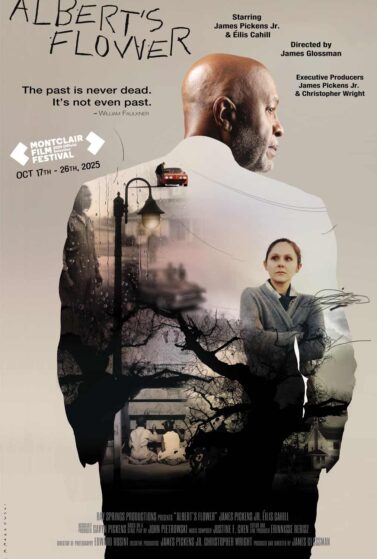
Allies arrive in unexpected places
On a quiet, tree-lined street, Albert returns to the home he once knew, barefoot and disoriented, as if pulled there by something he can neither name nor escape. The house is no longer his. Greta, its cautious and perceptive new owner, opens the door to a stranger who claims a past within its walls. As she tries to determine whether Albert is wounded, unstable, or potentially dangerous, an uneasy bond begins to form between them.
But the house holds more than memories. As fragments of Albert’s childhood resurface, a long-buried wound emerges—one that has shaped the course of his life in ways he has never fully confronted. What begins as an unexpected encounter becomes a reckoning, forcing Albert to face the truth of what happened there and to ask whether redemption is possible when the past has gone untended for so long.
Albert’s Flower is a taut, intimate drama about memory, accountability, and the quiet ways unresolved pain follows us into the present. It is a story about the courage it takes to confront uncomfortable truths—and about the fragile hope that even the most neglected parts of ourselves can still bloom.

Director's Statement
What do we do with – what do we do about – the maddening, ungainly, exhausting, and sometimes ridiculous baggage we carry around with us; that hurts with every step we take; and at the same time makes us, for good and bad and in-between, who we actually are? And, more to the point: What do we do NOW?
This is the question, the endlessly exciting dynamic – the Weight of the Past on the Present – that gets me up in the morning as an artist. And it is very much the central core of Albert’s Flower.
Am I the sum of each and every thing that has happened to me, or its hostage? Do we get second chances to make who we are? And more than this: Can the heart, once locked, find a working key?
That’s the sealed box Albert’s Flower is there to snap open.
-James Glossman